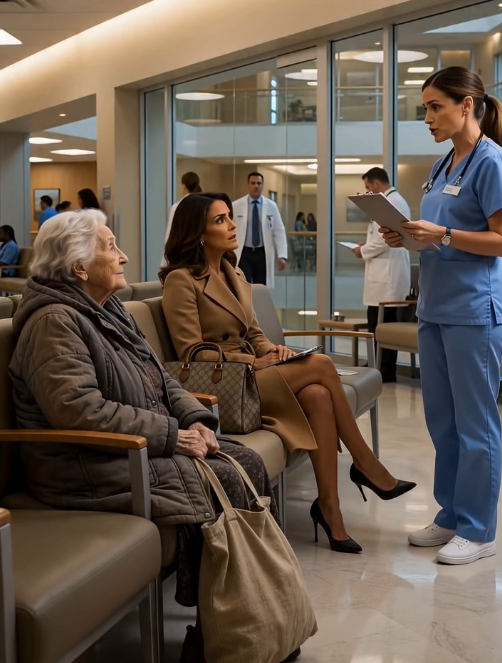
The private hospital’s VIP waiting area glowed with soft ambient lighting and polished marble floors. Elderly Mrs. Eleanor Harth sat peacefully on the leather couch, her worn tote bag at her feet. Beside her, a well-dressed woman in a camel coat looked concerned as the nurse approached with clipboard in hand.
“She shouldn’t be here. This is VIP only,” the nurse stated firmly.
The younger woman raised her hand. “Wait, please wait.”
The nurse continued politely but insistently: “Ma’am, I’m afraid this section requires a special pass.”
Tension thickened until hurried footsteps echoed. Dr. Michael Reeves burst into the lounge, face pale with recognition. He knelt directly in front of Mrs. Harth, hands clasped.
“Mrs. Harth… you funded our pediatric floor for twelve years. You can sit anywhere in this building.”
The younger woman stared in shock. Mrs. Harth looked down at the kneeling doctor with kind, wrinkled eyes and smiled warmly. “I don’t need the VIP room, doctor. I just came to check on the children.”
She rose slowly, gathered her bag, and walked down the long hallway. Through the glass walls, children’s faces lit up, waving excitedly as she passed. The grand donor didn’t seek luxury — only connection with the young lives her generosity had touched.
In that moment, the hospital’s hierarchy dissolved. True status wasn’t measured by passes or privileges, but by quiet compassion that outlasted any donation.